

Chaos Envision Review:
Is It Worth It in 2026?
Chaos Envision is best suited for architecture and design teams who need to conduct collaborative VR design reviews with clients and stakeholders — enabling multiple participants to enter a 3D model simultaneously and discuss design decisions in an immersive environment.
Best For
Our Overall Rating
Based on comprehensive testing
Best For
- Architecture firms conducting immersive design review sessions with clients
- Design teams collaborating across locations on spatial design decisions
- Real estate developers presenting off-plan properties to investors in VR
- Interior design studios reviewing furnished 3D spaces with clients before construction
Pricing
See current pricing on the Chaos Envision website.
Bottom Line
Chaos Envision is best suited for architecture and design teams who need to conduct collaborative VR design reviews with clients and stakeholders — enabling multiple participants to enter a 3D model simultaneously and discuss design decisions in an immersive environment.
Visit Chaos Envision →Quick Verdict
Chaos Envision scores 8.4/10 in our testing and is a strong choice for Architecture firms conducting immersive design review sessions with clients and Design teams collaborating across locations on spatial design decisions.
What Is Chaos Envision?
Overview
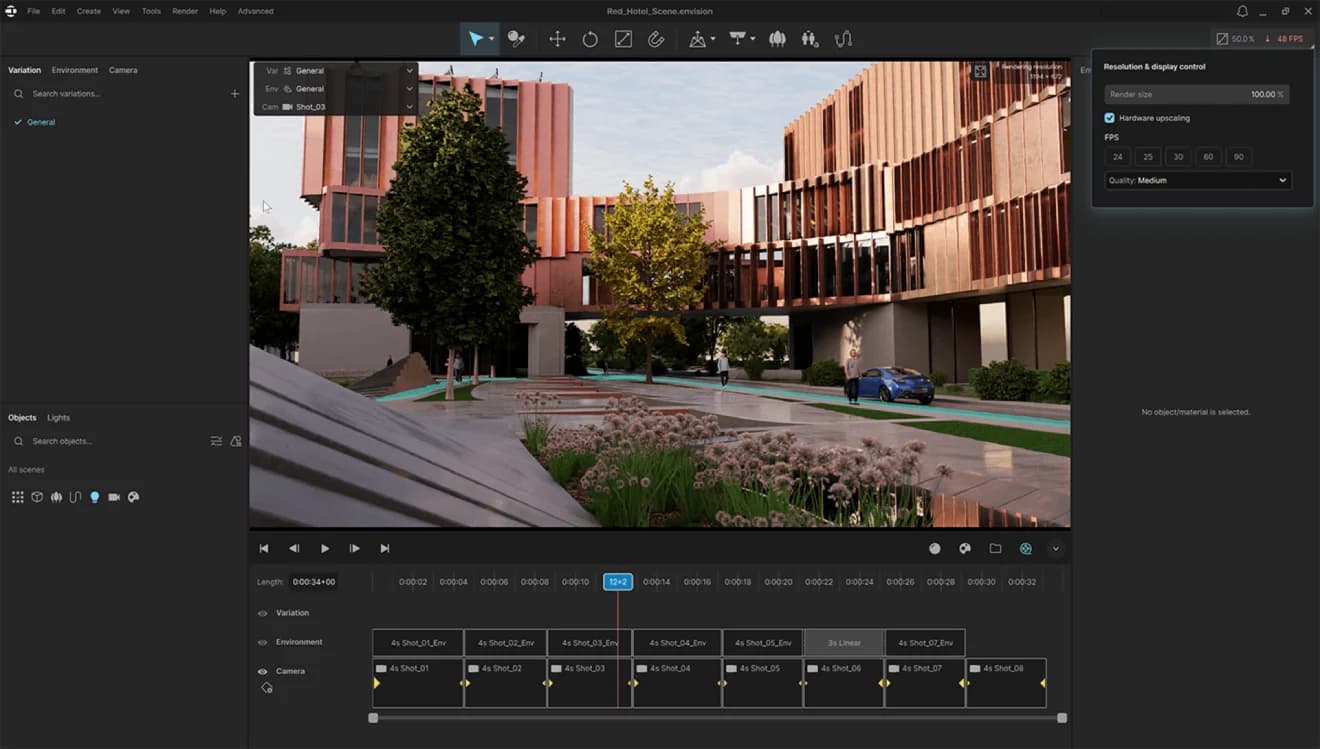
Chaos Envision is a collaborative virtual reality design review platform from Chaos Group that allows multiple participants to enter and navigate a shared 3D architectural model simultaneously. Where traditional design review relies on 2D presentations or single-user 3D walkthroughs, Envision enables a client, architect, and project team to inhabit and discuss a space together in VR — each participant represented by an avatar and able to annotate, gesture, and communicate within the shared environment.
For architecture firms whose clients struggle to interpret 2D drawings or even rendered still images, immersive VR review sessions can significantly improve design communication and reduce late-stage changes driven by misunderstood spatial intent.
This review evaluates Chaos Envision based on its collaboration capabilities, visual quality, and practical fit for architecture and design teams in 2026.
Key Features
Multi-User VR Collaboration
The core capability that differentiates Envision from single-user VR tools is multi-user presence — multiple participants can be in the same virtual space simultaneously, each able to move independently, gesture, and speak to each other while experiencing the design from their own perspective.
In-VR Annotation and Markup
During review sessions, participants can place annotations, draw in space, and mark design elements for discussion — capturing design review feedback directly in the 3D environment rather than translating VR session notes into a separate document afterward.
Integration with Chaos Vantage
Envision connects to Chaos Vantage for real-time ray-traced rendering quality in VR — bringing near-photorealistic lighting and material quality to the collaborative review rather than relying on basic game-engine rasterization.
Remote Participation
Participants don't need to be in the same physical location — Envision supports remote VR sessions where distributed teams and clients connect from separate locations, making it practical for international project teams and clients.
Pros & Cons
Pros
- ✅ Multiple users can enter and navigate the same 3D model simultaneously in VR
- ✅ Supports annotation and markup inside the VR environment during review sessions
- ✅ Connects to Chaos Vantage for near-photorealistic real-time ray-traced visuals in VR
- ✅ Enables remote stakeholder participation without physical meeting requirements
Cons
- ❌ Requires VR headset hardware which adds cost and logistics to client meeting workflows
- ❌ Most effective as part of the broader Chaos ecosystem rather than a standalone tool
- ❌ VR adoption among clients is still limited — not all clients are comfortable with headsets
- ❌ Primarily a review and communication tool rather than a design or production tool
Who Is It Best For?
Chaos Envision is the right tool if you:
- Conduct regular immersive design reviews with clients who need spatial context to make design decisions
- Already use Chaos Vantage or V-Ray and want to extend your visualization toolkit to collaborative VR
- Work on projects where spatial understanding matters — large residences, commercial interiors, hospitality
- Have clients who are willing and able to use VR headsets during review sessions
Chaos Envision is not the right tool if you:
- Work with clients who are resistant to or unable to use VR hardware
- Need a standalone visualization tool outside the Chaos ecosystem
- Require real-time design editing within VR rather than just review and annotation
Alternatives to Consider
- Chaos Vantage — real-time ray-traced visualization without the multi-user VR collaboration layer
- Enscape — faster to set up real-time VR from within Revit or SketchUp without the Chaos dependency
- Twinmotion — Unreal Engine-based real-time renderer with VR support and a large architecture user base
- Lumion — accessible real-time renderer with VR output, better for broader team adoption
- IrisVR Prospect — purpose-built multi-user VR design review platform with broader 3D format support
Final Verdict
Chaos Envision solves a real communication challenge in architectural design — helping clients understand spatial design intent in ways that 2D drawings and static renders cannot. The multi-user VR capability is genuinely differentiated: there is no substitute for standing inside a space together and pointing at what needs to change.
The adoption barrier is real — client VR comfort varies, and headset logistics add friction to review workflows. But for firms working on high-value projects where design misunderstandings lead to expensive late-stage changes, the investment in collaborative VR review is defensible.
Our recommendation: Pilot Envision on a single project with a client who is open to VR before rolling it out as a standard review tool. The first session will clarify whether the design communication benefit justifies the logistics overhead for your specific client base.
Key Features
Multiple users can enter and navigate the same 3D model simultaneously in VR
Supports annotation and markup inside the VR environment during review sessions
Connects to Chaos Vantage for near-photorealistic real-time ray-traced visuals in VR
Enables remote stakeholder participation without physical meeting requirements
Best For
Architecture firms conducting immersive design review sessions with clients
Design teams collaborating across locations on spatial design decisions
Real estate developers presenting off-plan properties to investors in VR
Interior design studios reviewing furnished 3D spaces with clients before construction
Pros & Cons
What We Like
- Multiple users can enter and navigate the same 3D model simultaneously in VR
- Supports annotation and markup inside the VR environment during review sessions
- Connects to Chaos Vantage for near-photorealistic real-time ray-traced visuals in VR
- Enables remote stakeholder participation without physical meeting requirements
What We Don't Like
- Requires VR headset hardware which adds cost and logistics to client meeting workflows
- Most effective as part of the broader Chaos ecosystem rather than a standalone tool
- VR adoption among clients is still limited — not all clients are comfortable with headsets
- Primarily a review and communication tool rather than a design or production tool
Top Chaos Envision Alternatives
View all alternatives →


Chaos Envision vs Top Alternatives
| Tool | Best For | Price | AI Quality | Features | Support | Ease of Use | Rating | |
|---|---|---|---|---|---|---|---|---|
 | Architecture firms conducting immersive design review sessions with clients | Contact for pricing | 8.4/10 | Current | ||||
 | Architecture | Contact for pricing | 7.9/10 | Read Review → | ||||
 | Architecture | Contact for pricing | 7.6/10 | Read Review → | ||||
 | Architecture | Contact for pricing | 7.3/10 | Read Review → | ||||
 | Architecture | Contact for pricing | 7/10 | Read Review → |
Our Chaos Envision Verdict
Chaos Envision is best suited for architecture and design teams who need to conduct collaborative VR design reviews with clients and stakeholders — enabling multiple participants to enter a 3D model simultaneously and discuss design decisions in an immersive environment.
Visit website for full details
FAQ
Related Articles
View all articles →Best AI Design Tools for Professionals in 2026
Discover the top AI tools we recommend in AI Design Tools.
View Hub →Chaos Envision vs Top Alternatives: Full Comparison
Side-by-side breakdown of Chaos Envision and its main competitors.
View Comparisons →Hands-on Guides & Workflows
Step-by-step playbooks for getting the most out of tools like Chaos Envision.
Browse Guides →Related Tools in AI Design Tools
See all the best AI Design Tools →
QR Code AI
QR Code AI is best suited for furniture retailers, real estate agents, and contractors who want branded, on-style QR codes for signage, listings, and print materials instead of generic black-and-white squares.
Read Review →
Turbologo
Turbologo is best suited for small architecture, construction, furniture, and real estate businesses that need a professional logo and basic brand kit fast, without hiring a graphic designer.
Read Review →
AI Designer
AI Designer is best suited for small architecture, construction, furniture, and real estate businesses that need polished website, app, or brand visuals from a prompt without hiring a designer or learning design software.
Read Review →
Pixelcut.ai
Pixelcut.ai is best suited for furniture and home decor sellers who need fast, affordable AI product photo editing — background removal, scene generation, and photo enhancement — to produce e-commerce-ready images without a professional photo studio.
Read Review →