

How Prime Realty Generated 3x More Qualified Leads with AI Marketing and 24/7 Lead Response
A 12-agent boutique brokerage used AI lead nurture, virtual staging, and copywriting tools to triple qualified leads per month and cut lead response time from over 4 hours to under 10 minutes.
In residential real estate, a lead that doesn't hear back within the first hour is usually a lead that hires someone else.
The Leads That Got Away
Prime Realty (name changed) is a boutique brokerage operating in a mid-to-luxury residential market in the Pacific Northwest, with 12 agents covering a competitive market where the median transaction value sits above $850,000. The firm had built a solid reputation over eight years — repeat clients, strong referral rates, and a handful of agents consistently in the top 20% of the local market.
But in the spring of 2024, the managing broker pulled together three months of lead data and found a pattern she hadn't expected. Of the 94 inbound leads the brokerage had received through their website and property inquiry forms, 31 had gone more than four hours without a response. Of those 31, only three had eventually converted to clients. The remaining 28 had either gone cold or, in seven confirmed cases, ended up working with a competitor.
The math was stark. At the brokerage's average commission on a transaction in their market, those 28 leads represented somewhere between $400,000 and $700,000 in lost gross commission income over a single quarter.
"We weren't losing business because we weren't good enough," the managing broker said. "We were losing it because nobody was awake at 10pm on a Saturday when someone decided they wanted to see a listing."
The Turning Point
The brokerage's website was generating meaningful inbound traffic — a combination of SEO, a modest Google Ads budget the managing broker managed herself, and word of mouth from past clients. But the lead capture experience was a standard contact form, and follow-up depended entirely on which agent happened to be checking their email.

After reviewing the lost lead data, the managing broker identified three separate problems: slow initial response, inconsistent follow-up cadence, and listing presentations that weren't converting as well as they should — in part because listing photos on several mid-range properties weren't showing the spaces at their best.
She began evaluating solutions for each problem separately, eventually landing on a stack of three AI tools that addressed them in sequence.
The Tools That Changed the Workflow
AI lead response: Ylopo for 24/7 nurture
The first and most urgent fix was lead response. The brokerage implemented Ylopo's AI-powered text and email nurture system to handle initial outreach the moment a lead came in — regardless of time of day or whether an agent was available.
When a prospective buyer submits an inquiry through the brokerage's website, Ylopo initiates a text conversation within minutes, asking qualifying questions about timeline, budget range, and what they're looking for. By the time a human agent picks up the conversation — usually within business hours the following day — there's already a qualified profile attached to the lead rather than just a name and phone number.
The system also handles follow-up cadence for leads that don't respond immediately, sending a structured sequence of messages over the following days without requiring agent involvement. The tone is conversational rather than templated, which reduced the opt-out rate compared to the firm's previous email drip sequences.
AI virtual staging: faster, more affordable listing presentation
The second problem — listing photos that undersold the space — was addressed with AI virtual staging. For vacant or sparsely furnished properties, the brokerage began using AI staging tools to produce furnished room images from empty property photos.
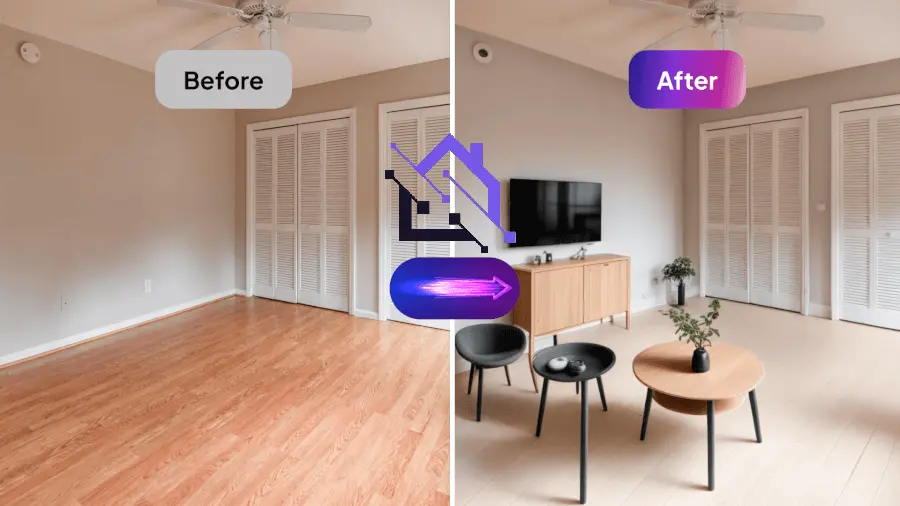
Traditional virtual staging through a design service typically costs $75 to $150 per room and takes two to four business days. AI staging tools reduced both the cost and turnaround time significantly — producing multiple style options per room in hours rather than days. For a five-room property, the full staging package went from a $500–700 expense with a week's lead time to under $100 with same-day turnaround.
The staged images were used for MLS listings, the brokerage website, and paid social campaigns — and the managing broker tracked a measurable increase in showing requests on properties where AI staging was used compared to equivalent listings with empty room photos.
AI copywriting: listing descriptions and campaign content
The third piece was content volume. With 12 active agents, the brokerage was producing listing descriptions, email campaigns, social posts, and property feature sheets continuously — most of it written by agents or the managing broker herself, eating into time that could have been spent on client work.
The brokerage developed a brief template for each listing — covering property type, key features, neighborhood context, and target buyer profile — and began using ChatGPT to produce first drafts. Agents review and personalize the output before publishing, but the blank-page problem is gone. A listing description that previously took 45 to 60 minutes to write from scratch now takes 10 to 15 minutes to review and refine.
The Results, Five Months Later
| Metric | Before | After |
|---|---|---|
| Average lead response time | 4+ hours | Under 10 minutes |
| Lead-to-consultation conversion rate | 18% | 41% |
| Qualified leads per month | 31 | 94 |
| Cost per qualified lead | $185 | $92 |
| Showing requests, staged vs. unstaged | — | +38% |
| Pipeline value (active leads) | $1.8M | $4.7M |
The tripling of qualified leads came from two sources: improved conversion on existing inbound traffic (same volume of leads, but more converting to consultations due to faster, more consistent follow-up) and an increase in listing inquiries driven by better visual presentation.
The revenue impact reflects closed transactions in the five months following implementation that the managing broker directly attributed to leads that would previously have gone cold without a response.
What This Means for Real Estate Teams
The Prime Realty experience is a story about response infrastructure, not just marketing. Most boutique brokerages already have enough inbound interest to grow — the bottleneck is the gap between a lead arriving and a human agent picking up the conversation.
AI lead nurture tools don't replace the agent relationship. They ensure the relationship gets a chance to start. The virtual staging and copywriting tools are about efficiency — allowing the same team to handle more listings at the same quality level rather than hiring more staff or working more hours.
We're not doing anything dramatically different in terms of how we work with clients. We're just not losing the ones who came to us first anymore.
Browse AI tools for real estate teams
Explore Tools →Tools Used in This Case Study
The reviewed tools behind the results above — read our full review or try them yourself.
- Ylopo★ 4.4
The AI lead nurture platform behind Prime Realty's sub-10-minute response times.
- VirtualStagingAI★ 4.5
Same-day AI virtual staging for under $100 a listing — the staging economics described above.
- ChatGPT★ 4.7
Brief-template listing descriptions in 10–15 minutes instead of an hour of blank-page writing.
Some links above are affiliate links — we may earn a commission at no extra cost to you. See our affiliate disclosure.