

Store.link Review:
Is It Worth It in 2026?
Store.link is best suited for furniture and home goods brands that sell through social media and want a single, shoppable link-in-bio storefront connecting their content to products, instead of sending followers to a generic homepage.
We may earn a commission when you purchase through links on our site. Learn more
Best For
Our Overall Rating
Based on comprehensive testing
Best For
- Furniture brands promoting specific products across Instagram and TikTok content
- Real estate agents linking to active listings from a single bio link
- Small home goods sellers without a full ecommerce site set up yet
- Creators and brands wanting one consolidated link across all social profiles
Pricing
See current pricing on the Store.link website.
Bottom Line
Store.link is best suited for furniture and home goods brands that sell through social media and want a single, shoppable link-in-bio storefront connecting their content to products, instead of sending followers to a generic homepage.
Visit Store.link →Quick Verdict
Store.link scores 8.0/10 in our testing and is a strong choice for Furniture brands promoting specific products across Instagram and TikTok content and Real estate agents linking to active listings from a single bio link.
What Is Store.link?
Overview
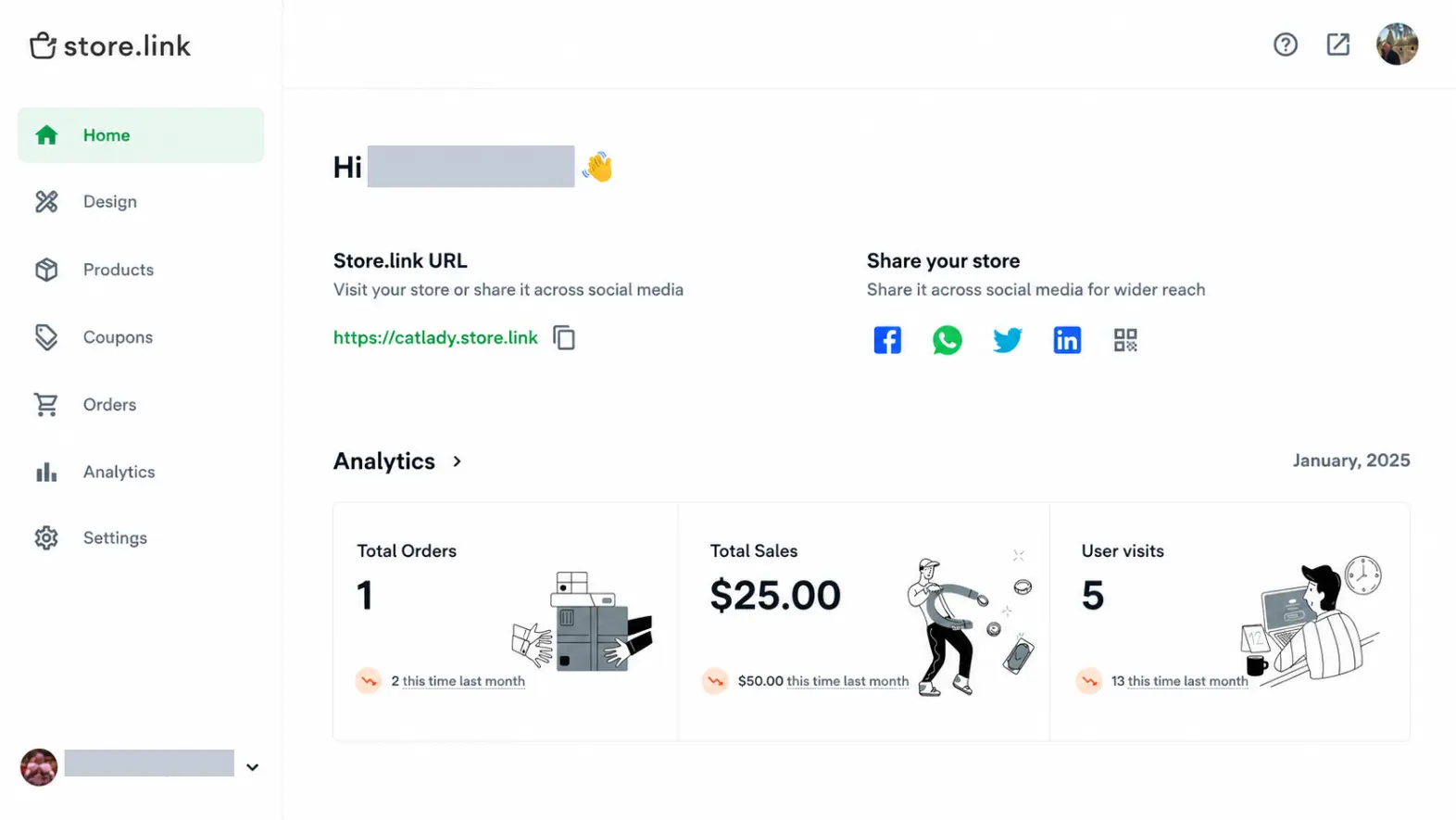
Store.link is a link-in-bio tool that turns a single social media link into a shoppable mini storefront — consolidating products, content, and calls to action into one destination rather than sending followers to a generic homepage that may not match what they were just looking at in a post or video.
For furniture and home goods brands that rely on social content to drive product discovery, this matters because the gap between "I saw this on Instagram" and "I can actually buy it" is one of the most common places potential sales are lost. A direct, relevant link shortens that path.
This review evaluates Store.link based on its setup simplicity, storefront presentation, and practical fit for social-driven product discovery heading into 2026.
Key Features
Shoppable Link-in-Bio Page
Rather than a single static link, Store.link presents a storefront-style page where visitors can browse multiple products or links from one entry point, tailored to match what brought them there.
Quick Setup
Setting up a Store.link page is designed to be fast, letting brands and creators get a functional link-in-bio storefront live without building or maintaining a full ecommerce site from scratch.
Multi-Platform Bio Link
The same Store.link page can be used across Instagram, TikTok, and other social profiles, giving a consistent destination regardless of which platform a follower discovers a brand through.
Content-to-Product Routing
Brands can route specific content — a post or video about a particular product — toward the relevant item on their Store.link page, keeping the connection between content and purchase intent clear.
Pros & Cons
Pros
- ✅ Single link consolidates products, content, and calls to action for social profiles
- ✅ Lower setup effort than building a dedicated landing page for social traffic
- ✅ Keeps the path from social discovery to purchase shorter and more direct
- ✅ Useful for brands or creators promoting multiple products across content
Cons
- ❌ Less customizable than a full ecommerce storefront or website
- ❌ Best suited as a traffic-routing layer rather than a complete sales platform
- ❌ Value depends on having consistent social content driving traffic to the link
- ❌ Deeper catalog or checkout features still typically point back to a main store
Who Is It Best For?
Store.link is the right tool if you:
- Drive product discovery through social content and need a relevant landing destination
- Sell across multiple products and want one consolidated link rather than several
- Don't yet have (or don't want to maintain) a full ecommerce site for social-driven sales
- Post consistently enough that a bio link actually gets meaningful traffic
Store.link is not the right tool if you:
- Need a fully customizable, full-featured ecommerce storefront
- Have very low or inconsistent social posting, limiting the link's traffic
- Already have a strong, well-converting main website you'd rather send traffic to directly
Alternatives to Consider
Store.link is strong for consolidating social traffic into one shoppable destination, but it is not the only option:
- SkedSocial — relevant for planning the content that drives traffic to your link in the first place
- Zigpoll — useful for understanding visitor intent once they land on your storefront
- Pricefy — relevant for monitoring competitor pricing on the products you're promoting
- Cometly — useful if you're running paid ads and need to track attribution to sales
- WhatsForm — better if you want inquiries routed through WhatsApp rather than a storefront page
Final Verdict
Store.link earns its place as a low-effort way to give social media traffic somewhere relevant and shoppable to land, rather than a generic homepage. For furniture and home goods brands actively posting product content, shortening that path from discovery to purchase is a direct, practical improvement.
Its value is tied to having consistent social content driving traffic — without that, even the best-designed bio link page won't generate much on its own.
Our recommendation: Set up Store.link alongside a consistent posting schedule, and track which products get the most clicks to inform what to promote next.
Key Features
Single link consolidates products, content, and calls to action for social profiles
Lower setup effort than building a dedicated landing page for social traffic
Keeps the path from social discovery to purchase shorter and more direct
Useful for brands or creators promoting multiple products across content
Best For
Furniture brands promoting specific products across Instagram and TikTok content
Real estate agents linking to active listings from a single bio link
Small home goods sellers without a full ecommerce site set up yet
Creators and brands wanting one consolidated link across all social profiles
Pros & Cons
What We Like
- Single link consolidates products, content, and calls to action for social profiles
- Lower setup effort than building a dedicated landing page for social traffic
- Keeps the path from social discovery to purchase shorter and more direct
- Useful for brands or creators promoting multiple products across content
What We Don't Like
- Less customizable than a full ecommerce storefront or website
- Best suited as a traffic-routing layer rather than a complete sales platform
- Value depends on having consistent social content driving traffic to the link
- Deeper catalog or checkout features still typically point back to a main store
Top Store.link Alternatives
View all alternatives →


Store.link vs Top Alternatives
| Tool | Best For | Price | AI Quality | Features | Support | Ease of Use | Rating | |
|---|---|---|---|---|---|---|---|---|
 | Furniture brands promoting specific products across Instagram and TikTok content | Contact for pricing | 8/10 | Current | ||||
 | Furniture | Contact for pricing | 7.5/10 | Read Review → | ||||
 | Furniture | Contact for pricing | 7.2/10 | Read Review → | ||||
 | Furniture | Contact for pricing | 7/10 | Read Review → | ||||
 | Furniture | Contact for pricing | 7/10 | Read Review → |
Our Store.link Verdict
Store.link is best suited for furniture and home goods brands that sell through social media and want a single, shoppable link-in-bio storefront connecting their content to products, instead of sending followers to a generic homepage.
Visit website for full details
FAQ
Related Articles
View all articles →Best AI Sales Tools for Professionals in 2026
Discover the top AI tools we recommend in AI Sales Tools.
View Hub →Store.link vs Top Alternatives: Full Comparison
Side-by-side breakdown of Store.link and its main competitors.
View Comparisons →Hands-on Guides & Workflows
Step-by-step playbooks for getting the most out of tools like Store.link.
Browse Guides →Related Tools in AI Sales Tools
See all the best AI Sales Tools →
Warmup Inbox
Warmup Inbox is the most affordable dedicated email warmup tool in 2026, starting at $15/month per inbox. It automatically exchanges emails with a 30,000+ real inbox network to build sender reputation, reduce spam rates, and improve email deliverability for cold outreach and marketing campaigns.
Read Review →
Apollo.io
Apollo.io is best suited for architecture, construction, and furniture B2B teams that want a large, filterable contact database combined with AI-personalized outreach sequences in one platform instead of stitching together a separate list provider and sending tool.
Read Review →
folk
folk is best suited for small real estate, architecture, and construction teams who want a fast, simple CRM built around Gmail, LinkedIn, and WhatsApp relationships rather than a heavy enterprise sales platform.
Read Review →
Hunter.io
Hunter.io is best suited for architecture, construction, and furniture B2B teams that need to find and verify a specific person's professional email address before reaching out, without guessing at a format or risking a bounced message.
Read Review →