
AI News Roundup — Week of July 14, 2026: Palantir Comes to the Jobsite, YC Floods the Back Office, and Image Models Learn Layers
Weekly Roundup

AI News Roundup — Week of July 14, 2026: Palantir Comes to the Jobsite, YC Floods the Back Office, and Image Models Learn Layers

2026-07-14Week of July 14, 20266 min read

Two weeks ago the money went into decisions. This week it went into presence: AI physically showing up where the work happens — on the jobsite, inside the property manager's software stack, and in the pixel layers of a design render. Meanwhile, Meta decided it finally wants your API dollars.

Here are the five stories worth your attention, and why each one matters if you design, build, sell, or furnish spaces for a living.

The 5 Stories That Matter This Week

Construction

McCarthy's Palantir deal signals AI's move from back office to jobsite

McCarthy Building Companies — one of the largest contractors in the US — has a multiyear, multimillion-dollar agreement with Palantir that drew fresh industry attention this week. The deal, first announced in early June and reported by Construction Dive, centers on Pulse: McCarthy's AI-native system built on Palantir's Artificial Intelligence Platform, designed to give field teams real-time insight, scenario planning, risk analysis, and decision orchestration from design through active building.

The sober counterpoint came from RICS panel member James Garner (Head of AI and Data at Gleeds), who argued that data readiness — not software — is the real bottleneck, and that "culture over cost" is the more important strategic consideration when construction firms evaluate AI.

Why it matters for you: When a tier-one contractor anchors its AI strategy on a single platform instead of a patchwork of point solutions, it sets the template mid-size firms will be measured against. But Garner's warning is the actionable part: before you budget for any AI tool, audit whether your project data is clean, connected, and accessible. A platform on top of fragmented data is an expensive dashboard. Investors and insurers are already starting to ask how AI is governed on projects — documenting that now is cheaper than retrofitting it under contract pressure.

Source: MarketScale, July 11, 2026
ConstructionPalantirJobsite AI
Construction

Sodex Innovations raises €4M for real-time construction site intelligence

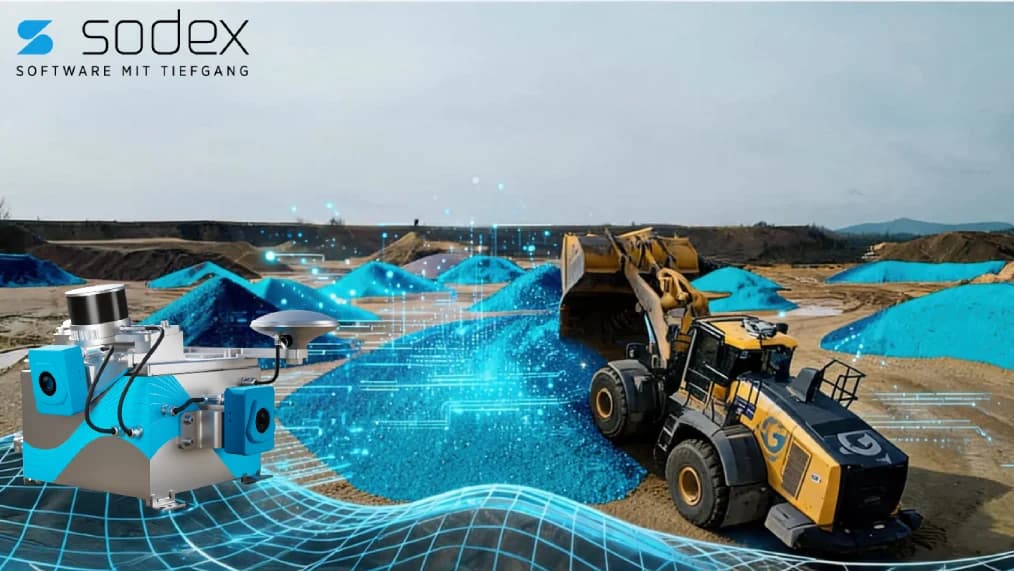
Austrian-German startup Sodex Innovations closed a €4 million round led by Capmont Technology, with new investors Bloomhaus Ventures, Look AI Ventures, and the superangels group, plus follow-on from SOSV, OMA, and 12 Rounds Capital. Sodex builds AI-powered technology that automatically surveys and digitally maps construction sites, mines, and infrastructure projects while they operate — no separate survey pass required.

Capmont partner Michael Wittner framed the thesis: "For the first time, Sodex makes physical construction activity measurable and controllable in real time, thereby creating the data foundation on which the industry will be managed in the future."

Why it matters for you: Remember Garner's point in story one — data readiness is the bottleneck? This is the supply side of that same trade. Continuous, automated site capture turns the jobsite itself into a live dataset: progress tracking without a drone pilot on the payroll, earthworks volumes without a survey crew, as-built conditions that never drift from reality. If your firm still reconciles jobsite reality against the model once a week by hand, tools in this category are how that gap closes — and how disputes about "what was actually built when" start being settled by data instead of memory.

Source: Proptech Connect, July 13, 2026

ConstructionSite IntelligenceFunding
AI News Roundup — Week of July 14, 2026: Palantir Comes to the Jobsite, YC Floods the Back Office, and Image Models Learn Layers — illustration 1
Market

Y Combinator floods construction and proptech with AI back-office startups

YC's real estate and construction portfolio hit 126 companies as of July 2026, and the newest cohort is strikingly concentrated: FlowManual (all-in-one construction back office), Foreman (AI takeoffs, estimates, and proposals from uploaded plans), Rudus (concrete estimation, claiming 70% less estimation time), PLAN0 AI (plan-reading vision models with $20B in projects on platform), and Helonic (automatic clash detection across architectural, structural, and MEP drawings, with Procore and Autodesk integrations). On the property side, CentralComs and Brickwise are building AI agents that live inside AppFolio, Buildium, and Yardi, while RealPact automates transaction paperwork for brokerages.

Why it matters for you: Venture concentration this dense is a map of where the pain is priced. Nobody in this cohort is selling a fancy render engine — they're all attacking spreadsheets, proposals, RFIs, maintenance tickets, and deal paperwork. If you run a small firm, the practical move isn't to adopt all of these; it's to notice that the admin tasks eating your evenings are now cheap enough for a seed-stage startup to automate — which means within a year, your competitors will have. Pilot one tool on one project and benchmark it against your current process.

Source: MarketScale, July 8, 2026

ProptechY CombinatorBack Office
Interior Design

Image models learned layers — and that changes design visualization

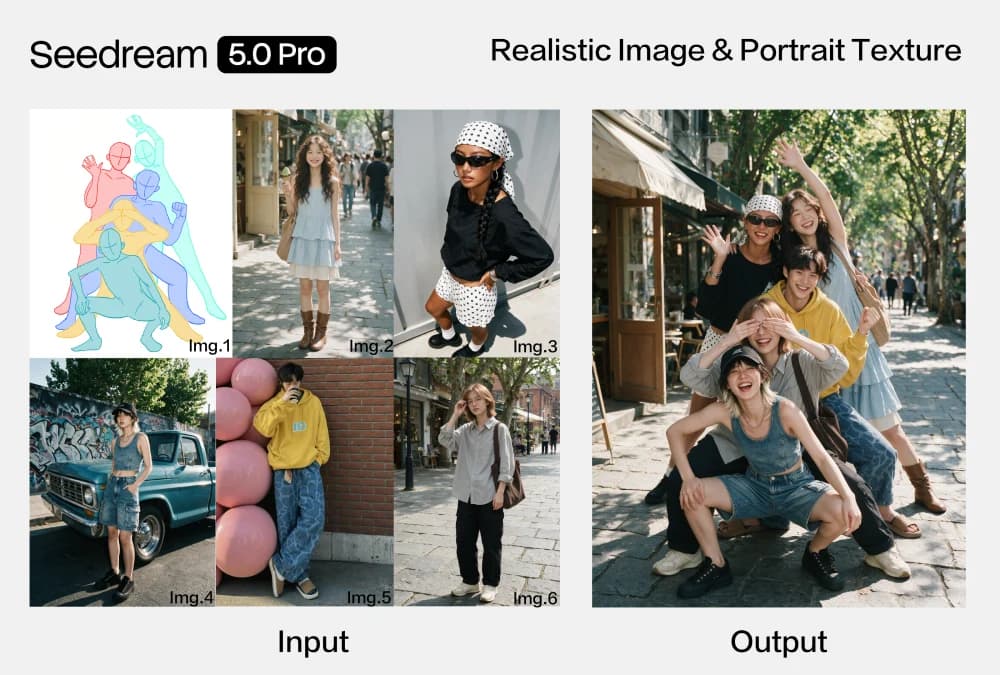
Two releases within 24 hours pushed AI image generation from "generator" to "design tool." ByteDance's Seedream 5.0 Pro ships interactive precision editing (point, lasso, sketch), intelligent layer separation that decomposes an image into editable layers, and 4K native output — rolling out enterprise-first via the BytePlus API, Dreamina, and Magnific. A day later, Reve 2.1 took #2 on the Text-to-Image Arena with a fundamentally different architecture: images are built through a layout engine, so every element lands on its own editable layer — change the sofa, and the image rebuilds around it instead of regenerating from scratch.

Why it matters for you: Layers are the difference between a pretty picture and a working document. For interior designers and furniture brands, the single biggest failure mode of AI visualization has been the all-or-nothing regeneration: fix the rug, lose the lighting. Layer-based generation means you can hold a client-approved scheme constant and swap one product, one finish, one wall color — which is how real revision cycles actually work. This is the week AI renders started behaving like design files. If you sell furniture, it's also the week product-swap lifestyle imagery got dramatically cheaper.

Source: ThursdAI, July 8–9, 2026

Image AIDesign ToolsLayers
AI News Roundup — Week of July 14, 2026: Palantir Comes to the Jobsite, YC Floods the Back Office, and Image Models Learn Layers — illustration 2
Market

Meta ships Muse Spark 1.1 — and its first-ever paid developer API

Meta announced Muse Spark 1.1, a 1M-token-context agentic model it claims rivals the top frontier models on agentic benchmarks, with computer use across desktop, browser, and mobile, and parallel subagent delegation. The bigger structural news: it arrives with Meta's first-ever paid developer API, in public preview at $1.25/$4.25 per million tokens (US-only at launch, $20 free credits), with Replit, Cline, and Box as early partners. No open weights — a notable break from Meta's Llama-era playbook.

Why it matters for you: For AEC and design businesses, two things changed. First, pricing: a frontier-class agentic model at $1.25 per million input tokens keeps dragging down the cost of running AI over your document-heavy workflows — bids, specs, listings, punch lists. Second, computer use across desktop and browser is the capability to watch: agents that can operate the software you already own (a CRM, a PM tool, even a design app) rather than requiring everything to have an API. Treat vendor benchmark claims with the usual skepticism, and test on your own workflows before committing — but the direction is unambiguous: the agents are learning to use your tools, not the other way around.

Source: ThursdAI, July 9, 2026

AI ModelsAgenticMeta
The Through-Line

Every story this week is about AI closing the distance to where work physically happens: Palantir's platform reaching field teams, Sodex mapping sites in real time, YC startups embedding agents inside Yardi and Procore, image models exposing their layers to a designer's hand, and Meta's agents learning to drive desktop software. The "AI as a separate app you visit" era is ending in the built environment; the "AI inside the tools and places you already work" era is being funded, shipped, and priced right now.

The strategic read for anyone in architecture, construction, real estate, interior design, or furniture: stop evaluating AI tools by their demos and start evaluating them by their integrations. The winners this week all share one trait — they meet the work where it already lives.

Editorial note: This roundup summarizes reporting from the sources linked above; figures and claims belong to those sources. Always verify specifics against the primary source before acting on them.

#AI News#Construction#Real Estate#Architecture#Interior Design#Weekly Roundup
Next roundup: Week of July 21, 2026

Get Weekly AI News in Your Inbox

Join 10,000+ professionals who get the most important AI updates for architecture, construction, real estate, and design every week.

✓ No spam✓ Unsubscribe anytime✓ 100% Free